 Context earns its place through relationship
Decide what the surroundings must say
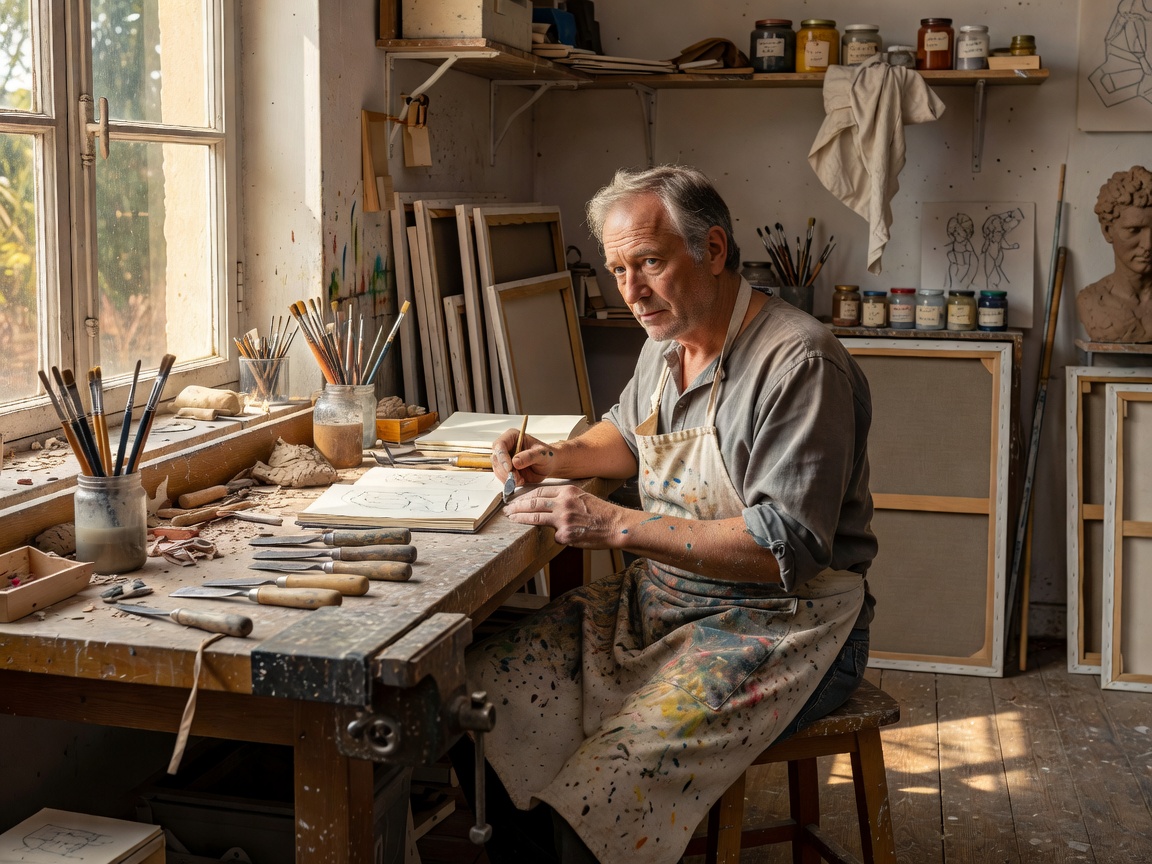
A tight portrait asks us to attend to a face, a gesture and the small variations of expression. An environmental portrait adds relationships: a chair to a body, tools to a hand, a window to a working space. Neither approach is more authentic by default. A spare studio portrait can reveal an unguarded gesture; a cluttered room can become decorative shorthand rather than meaningful context.
Before moving closer, identify what would disappear. If the room explains the person’s activity, cutting it away may weaken the photograph. If it merely repeats a familiar visual stereotype, a simpler frame may leave more room for the subject’s particular presence. Ask the person how they want to be represented, not only where they should stand.
Camera height changes the encounter
Eye-level framing often creates an accessible, direct relationship. A lower viewpoint can make a figure appear larger against the surroundings; a higher viewpoint can reveal the shape of a seated posture or the arrangement of hands. These are tendencies, not fixed psychological meanings. A low angle does not automatically communicate power, especially if expression and setting suggest uncertainty.
Camera position also changes facial perspective. Moving very close makes near features appear larger relative to more distant ones. Focal length influences how much of the scene fits from a chosen position, but it is the viewpoint that determines perspective. If a face feels distorted, test a greater camera-to-subject distance before assuming that a particular lens category will solve the problem.
Read gaze and space together
A person looking into the camera can establish an immediate point of exchange. Looking away can connect the face to something inside the picture or to an unseen space beyond it. Leaving room in the direction of the gaze may make that relationship easy to read. Withholding that room may produce pressure or curiosity. Describe the arrangement before announcing what the subject must be feeling.
Negative space beside a face is not wasted background. It can hold a quiet interval, balance a dark coat or make a slight turn of the head more noticeable. Watch for bright corners and high-contrast seams in that space. A blank wall with a sharp highlight can attract more attention than a softly lit expression, even when it occupies very little of the image.
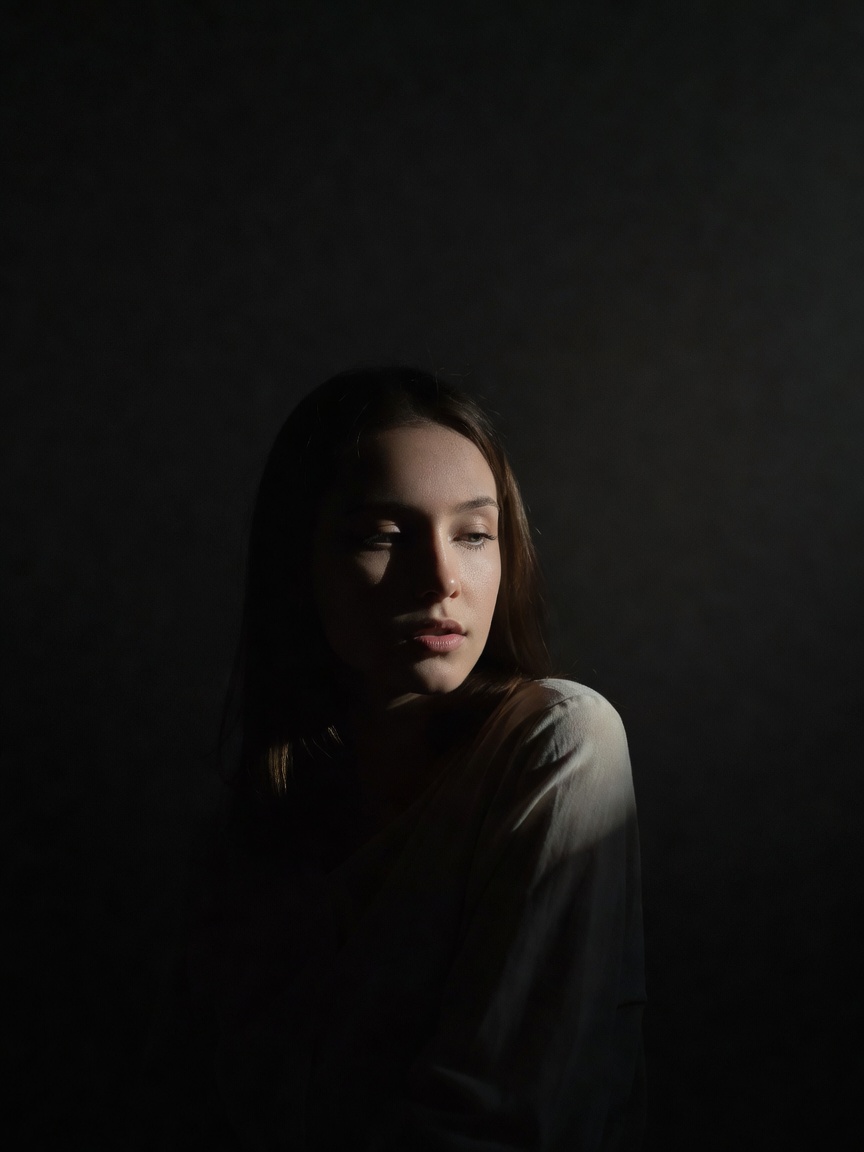 The cheek separates; the shoulder anchors
Give gesture enough room
Hands can clarify what a portrait is doing. A relaxed hand on a table, a repeated movement or a grip on an object may carry more information than an exaggerated facial expression. Include a hand because it contributes, not because every portrait needs one. Check where fingers meet the edge and whether a bright sleeve interrupts the route back to the face.
Try a sequence rather than a single instruction: ask the person to settle, look away, return and pause. Pay attention to changes between poses. Richard Avedon’s In the American West and August Sander’s People of the 20th Century offer very different ways to consider posture and social presentation. Neither body of work provides a neutral template for representing every person.
Light describes; it does not diagnose
Side light can reveal facial volume while leaving some features less visible. Frontal light can preserve more even detail. A shadowed face is not evidence of a troubled personality, and bright light is not evidence of openness. These are visual treatments applied in a particular encounter. Keep interpretations provisional, especially when discussing documentary portraits of people you do not know.
For skin, watch highlight detail and transitions rather than aiming for one numerical brightness across all faces. Different skin tones and reflectance respond differently to the same lighting arrangement. Exposure and processing should preserve the intended detail without treating light skin as a universal reference. Review important portraits with the subject when practical, particularly if the image will appear in a sensitive context.
A ranking with a specific purpose
For a profile whose main job is immediate personal recognition, a clean head-and-shoulders portrait often comes first. For an article about a craft, environmental framing may be stronger. For a study of movement or relationships, a wider portrait can provide necessary evidence. The order follows the communication task, not a universal hierarchy of portrait styles.
- 1Head and shoulders / recognition
Clear facial emphasis. Limited evidence about place or activity.
- 2Environmental / context
Shows relationships with surroundings. Background choices require discipline.
- 3Wide figure / gesture and scale
Makes posture and space legible. Expression may become secondary.